


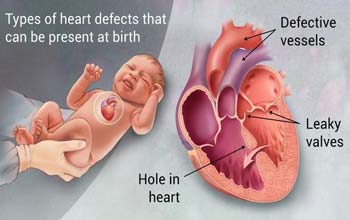
Congenital heart disease, also known as a congenital cardiac defect, refers to structural abnormalities of the heart present at birth, often associated with complex clinical manifestations that may be life-threatening.
Classification of congenital heart disease
Although there are numerous types of congenital cardiac defects, they can generally be classified into three main categories:
- Valvular defects: In these conditions, the heart valves that regulate blood flow may fail to open or close properly, or may become regurgitant. This disrupts normal hemodynamics and impairs the heart’s ability to pump blood effectively.
- Septal defects: These involve abnormalities in the walls (septa) separating the left and right sides, as well as the upper and lower chambers of the heart. Improper development may allow blood to flow abnormally between chambers or accumulate within the heart. This increases cardiac workload and may lead to elevated blood pressure.
- Vascular defects: In these cases, the arteries and veins responsible for transporting blood to and from the heart are malformed or function abnormally. This can reduce or obstruct blood flow, potentially resulting in a range of systemic complications.
Many clinicians classify congenital heart disease into two major categories: cyanotic and acyanotic forms. In both conditions, the heart is unable to pump blood as efficiently as normal.
The key difference lies in blood oxygenation. Cyanotic congenital heart disease is associated with reduced arterial oxygen levels, whereas acyanotic congenital heart disease typically does not result in significant hypoxemia. Infants with decreased oxygen saturation may present with dyspnea and a bluish discoloration of the skin (cyanosis).
What are the symptoms of congenital heart disease?
Congenital heart defects are often detected during prenatal ultrasound or through specialized investigations such as echocardiography, chest X-ray, or magnetic resonance imaging (MRI).
In some cases, clinical manifestations may not become apparent until after birth. Newborns with congenital heart disease may present with the following symptoms:
- Cyanosis, characterized by a bluish discoloration of the lips, skin, fingers, and toes
- Dyspnea or tachypnea
- Feeding difficulties
- Low birth weight
- Chest discomfort
- Delayed growth and development
In other cases, symptoms of congenital heart defects may not appear until several years after birth. When clinical manifestations develop, they may include:
- Cardiac arrhythmias
- Dizziness
- Dyspnea
- Syncope or near-syncope episodes
- Edema
- Fatigue
Causes of congenital heart disease
Congenital heart disease results from abnormalities in cardiac structural development, leading to impaired cardiac function. Although the exact etiology is often difficult to determine, several contributing factors have been identified:
- Genetic factors: A family history of congenital heart disease or parental carriage of genetic mutations may increase the risk, even if the parents are asymptomatic
- Medication exposure: Maternal use of certain medications during pregnancy, particularly without medical supervision, may elevate the risk of fetal cardiac defects
- Substance use: Consumption of alcohol or illicit drugs during pregnancy is associated with a higher risk of congenital heart abnormalities
- Viral infections: Maternal viral infections, especially during the first trimester, may interfere with fetal cardiac development
- Maternal diabetes: Poorly controlled blood glucose levels, as seen in diabetes mellitus, can adversely affect fetal development, including the formation of the heart
How is congenital heart disease treated?
The management of congenital heart defects depends on the type and severity of the condition. Some infants with mild defects may experience spontaneous resolution over time. In contrast, more severe cases require long-term management using the following approaches:
Pharmacological therapy
Various medications can help improve cardiac function. Some agents are also used to prevent thrombus formation or to control cardiac arrhythmias.
Implantable cardiac devices
Certain complications associated with congenital heart defects can be managed with implantable devices, including pacemakers and implantable cardioverter-defibrillators (ICDs). Pacemakers help regulate abnormal heart rhythms, while ICDs can detect and correct life-threatening arrhythmias.
Cardiac catheterization procedures
Catheter-based techniques allow physicians to treat specific congenital heart defects without the need for open-heart surgery. In these procedures, a thin catheter is inserted into a vein, typically in the lower limb, and guided to the heart. Once in position, specialized instruments are passed through the catheter to correct the defect.
Open-heart surgery
If catheter-based interventions are not feasible, open-heart surgery may be required to repair congenital defects. This may include closure of septal defects, valve repair, or reconstruction of blood vessels.
Heart transplantation
In rare and complex cases where congenital defects cannot be corrected by other means, heart transplantation may be indicated. This procedure involves replacing the child’s diseased heart with a healthy donor heart.
Depending on the type of defect, diagnosis and treatment may begin immediately after birth, during childhood, or even in adulthood. Some congenital heart defects remain asymptomatic until later in life, leading to delayed diagnosis and management.
In such cases, newly recognized symptoms may include:
- Dyspnea
- Chest pain
- Reduced exercise tolerance
- Easy fatigability
The management of congenital heart disease in adults also varies depending on the severity of the defect. Some individuals may only require close monitoring, while others may need pharmacological therapy and surgical intervention.
How can congenital heart disease be prevented?
Women who are pregnant or planning to conceive can take several preventive measures to reduce the risk of congenital heart defects in their child:
- Consult a physician regarding any prescription or over-the-counter medications prior to pregnancy
- Ensure optimal glycemic control if diagnosed with diabetes before conception
- Receive vaccination against rubella (German measles) prior to pregnancy
- If there is a family history of congenital heart defects, consider genetic counseling and screening
- Avoid alcohol consumption and illicit drug use during pregnancy
Complications of congenital heart disease
Complications of congenital heart disease may develop years after initial treatment and include:
- Cardiac arrhythmias: These occur when the electrical signals regulating the heartbeat are disrupted, causing the heart to beat too fast, too slow, or irregularly. In severe cases, untreated arrhythmias may lead to stroke or sudden cardiac death. Scar tissue from previous cardiac surgeries may contribute to this complication.
- Infective endocarditis: This is an infection of the inner lining of the heart (endocardium), typically occurring when bacteria or other pathogens enter the bloodstream and localize in the heart. If left untreated, endocarditis can damage or destroy heart valves and may result in stroke.
- Stroke: Congenital heart defects may allow blood clots to pass through the heart and travel to the brain, leading to reduced or blocked cerebral blood flow.
- Pulmonary arterial hypertension: A form of elevated blood pressure affecting the pulmonary arteries. Certain congenital defects increase blood flow to the lungs, resulting in increased vascular pressure and workload.
- Heart failure: Also known as congestive heart failure, this condition occurs when the heart is unable to pump sufficient blood to meet the body’s needs. Some types of congenital heart disease can progress to heart failure over time.
Patients with congenital heart disease should undergo regular medical follow-up to closely monitor disease progression, ensure timely intervention, and enable early prevention of potential complications.
Register for consultation and cardiovascular evaluation with specialists with over 20 years of experience in the management of cardiovascular diseases at Hong Ngoc General Hospital here:
Note: The information provided in this article by Hong Ngoc General Hospital is for reference purposes only and does not replace professional medical diagnosis or treatment. Patients should not self-medicate. For an accurate assessment of their condition, individuals are advised to visit a medical facility for direct examination, diagnosis, and appropriate treatment planning by qualified physicians.
Follow the official fanpage of Hong Ngoc General Hospital for more useful health information and updates: https://www.facebook.com/BenhvienHongNgoc/