


Appendicitis can cause severe abdominal pain and may require immediate emergency treatment, as delayed intervention can lead to serious complications.
What is the appendix?
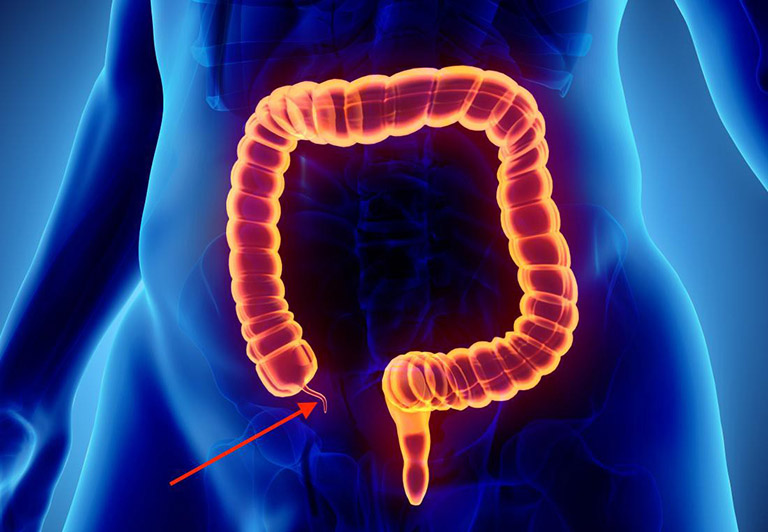
The appendix (vermiform appendix) is a small, blind-ended pouch of the intestine measuring about 0.5–1 cm in diameter and approximately 8 cm in length, attached to the cecum (the first portion of the large intestine). The inner lining of the appendix secretes a small amount of mucus that drains into the cecum. Its wall contains lymphoid tissue, which is part of the immune system and plays a role in antibody production.
Similar to the rest of the colon, the appendix wall also contains a muscular layer, though it is less well developed.
What is appendicitis?
Appendicitis is the inflammation of the appendix. It is believed to occur when the opening between the appendix and the cecum becomes obstructed. This blockage may result from the accumulation of mucus within the appendix or from stool entering the appendix from the cecum. Over time, the mucus or stool hardens into stone-like material, obstructing the opening.
This hardened stool is known as a fecalith (a small, stone-like mass, typically the size of a pea, hardened and calcified, that blocks the passage between the appendix and the cecum). In some cases, swelling of the lymphoid tissue within the appendix can also cause obstruction. Once the blockage occurs, normal resident bacteria inside the appendix begin to invade the wall of the appendix.
The body responds to this bacterial invasion with an inflammatory reaction. If the inflammation and infection spread through the wall, the appendix may rupture. A ruptured appendix allows infection to spread within the abdominal cavity. In some cases, the infection may become localized, forming what is known as a periappendiceal abscess.
Appendicitis pain: left or right side? How to recognize the signs
Appendicitis most commonly presents with pain in the lower right abdomen and may be accompanied by the following symptoms:
- Nausea and vomiting
- Pain in the lower right abdomen that worsens with pressure
- Pain initially around the navel that may radiate to the lower right abdomen
- Pain aggravated by coughing, sneezing, walking, or deep breathing
- Low-grade fever
- Diarrhea, constipation, or inability to pass gas
- Loss of appetite
- Abdominal bloating

Is appendicitis dangerous?
The severity of appendicitis largely depends on how early the condition is diagnosed. If appendicitis is not identified and treated promptly, it can lead to serious complications such as:
- Appendiceal mass: This occurs when the inflamed appendix becomes surrounded and walled off by adjacent tissues. It is often seen in otherwise healthy patients who have taken antibiotics and are admitted to the hospital on the 4th–5th day after the onset of right iliac fossa pain. This is the only form that does not require immediate emergency surgery and is managed conservatively. Once stabilized, an elective appendectomy is recommended after 3–6 months.
- Appendiceal abscess: This complication develops when pus and inflammatory fluid from the appendix leak out but are contained and localized by bowel loops and the omentum, forming an abscess. Patients typically present with worsening right lower abdominal pain and high fever. The preferred treatment is abscess drainage combined with antibiotic therapy, followed by an interval appendectomy after stabilization (approximately 3–6 months later).
- Peritonitis: When the appendix ruptures, pus and digestive fluids spill into the abdominal cavity, causing generalized peritonitis—a surgical emergency. Patients require urgent surgery for appendectomy, peritoneal lavage, and drainage, followed by broad-spectrum antibiotics. If not treated promptly, peritonitis can lead to severe sepsis, septic shock, and death.
- Sepsis: This is the most life-threatening complication, occurring when bacteria from the inflamed appendix enter the bloodstream, leading to multi-organ failure, septic shock, and a very high risk of mortality. It often develops as a consequence of untreated peritonitis.
However, appendicitis can be effectively managed if treated promptly with appendectomy in combination with high-dose antibiotics.
Laparoscopic appendectomy for the treatment of appendicitis
Laparoscopic appendectomy is the primary treatment for acute appendicitis, aimed at preventing serious complications. Surgery is indicated in cases such as uncomplicated appendicitis, perforated appendicitis with peritonitis, appendiceal abscess, sepsis secondary to appendicitis, or appendiceal mass (with elective surgery recommended after 3–6 months to prevent recurrence). In addition, chronic appendicitis with recurrent abdominal pain may also require surgical intervention.
Advantages of laparoscopic appendectomy
Laparoscopic appendectomy is increasingly favored due to its many advantages over traditional open surgery:
- Minimally invasive with less postoperative pain: Small incisions reduce patient discomfort and lower the risk of wound infection.
- Faster recovery time: Patients can often be discharged within 1–2 days and return to normal activities sooner.
- Smaller scars and better cosmetic outcomes: The surgical scars are minimal, making this technique particularly suitable for young patients and women.
- Reduced risk of adhesions and postoperative complications: Laparoscopy preserves abdominal structures, thereby lowering the risk of adhesions and intestinal obstruction in the future.
- Improved diagnostic and therapeutic capability: In atypical cases, laparoscopy allows surgeons to visualize the entire abdominal cavity and identify other potential pathologies.
Laparoscopic appendectomy procedure: before, during, and after surgery
Laparoscopic appendectomy is an effective and minimally invasive treatment that allows patients to recover more quickly than with traditional open surgery. So, what are the steps involved in this procedure?
1. Preoperative preparation
- Fasting: Patients must fast for at least 6 hours before surgery, except in emergency cases.
- Intravenous fluids: An IV line is established to provide fluids and maintain blood pressure.
- Prophylactic antibiotics: Administered to reduce the risk of postoperative infection.
- General anesthesia: Ensures that the patient remains pain-free throughout the operation.
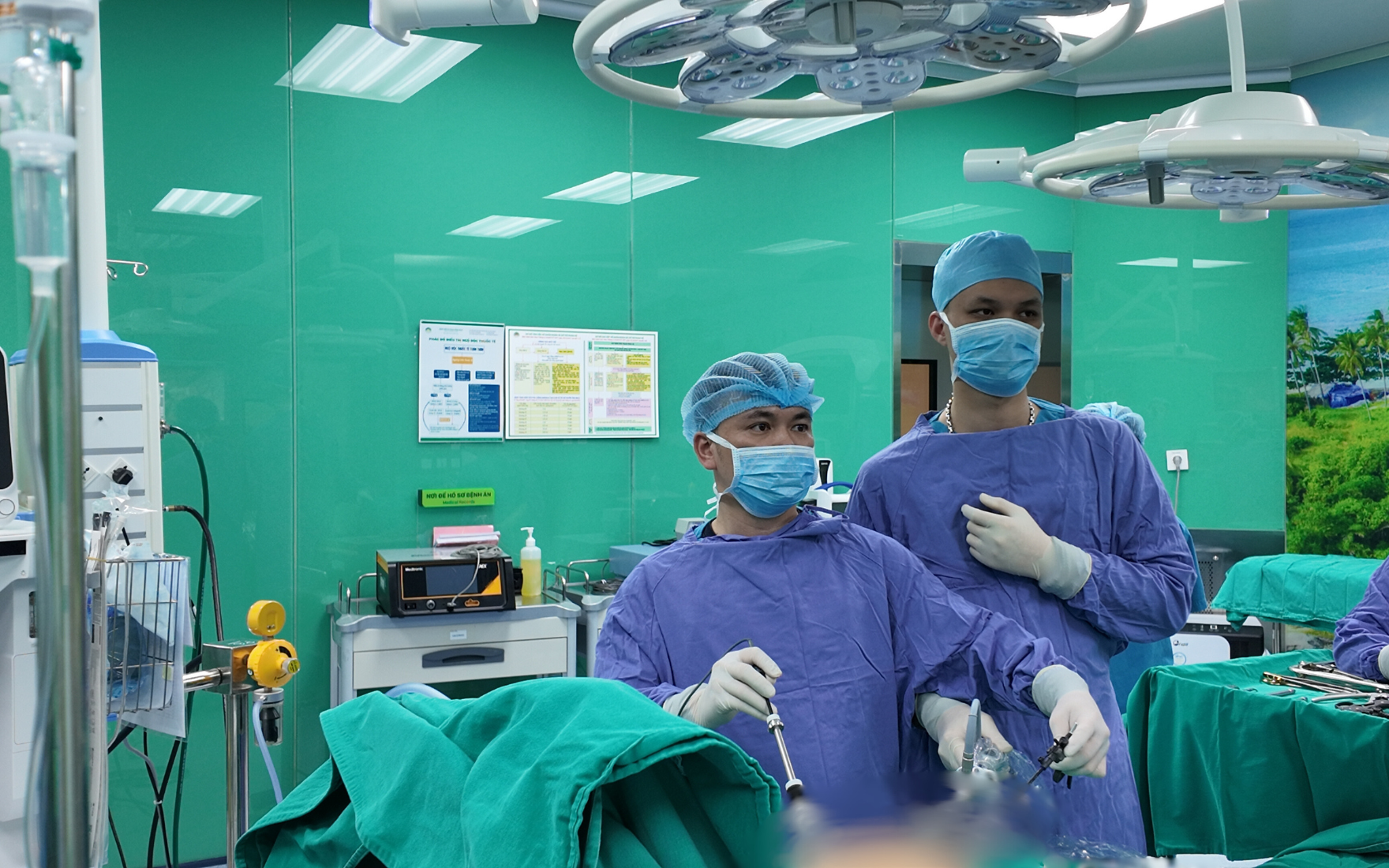
2. Laparoscopic appendectomy procedure
- General anesthesia and endotracheal intubation are performed to maintain respiration.
- Access to the abdominal cavity: The surgeon makes 2–3 small incisions near the navel, right subcostal area, and suprapubic region to insert trocars for laparoscopic instruments.
- Insufflation: Carbon dioxide (CO₂) is introduced to lift the abdominal wall and create working space for the surgery.
- Visualization: A high-resolution laparoscopic camera provides magnified images of the entire abdominal cavity.
- Appendix removal: The appendix is excised; if peritonitis is present, the abdominal cavity is irrigated and a drainage tube is placed to prevent fluid accumulation.
- Completion: Once the appendix is removed, the instruments are withdrawn and the incisions are sutured.
3. Postoperative care after laparoscopic appendectomy
- Monitoring: Patients are closely observed for heart rate, blood pressure, and responses after anesthesia.
- Diet: On the first day, only light meals such as thin porridge, milk, or soup are recommended to allow the digestive system to gradually adapt.
- Early mobilization: Encouraged to reduce the risk of adhesions and intra-abdominal fluid accumulation.
- Discharge and recovery: Most patients can be discharged after one day if no complications occur. In cases of perforated appendicitis with peritonitis, longer hospitalization with antibiotic therapy is required.
- Wound care: Patients may bathe but must change dressings and avoid getting the incision wet or infected.
- Nutrition and physical activity: A diet rich in vegetables and fruits with adequate hydration supports digestion. Strenuous activities should be avoided during the first 4 weeks.
- Follow-up: After 7 days, the surgeon will examine the incision and remove sutures to ensure proper wound healing.
What are the complications of appendectomy?
Laparoscopic appendectomy is a minimally invasive procedure that allows for rapid patient recovery. However, in rare cases, certain complications may still occur, such as:
- Surgical site infection
- Residual abscess
- Leakage at the appendiceal stump, leading to peritonitis
- Bowel obstruction due to postoperative adhesions
- Unintentional injury to adjacent organs such as the intestines or ureter
Therefore, after hospital discharge, patients should promptly seek medical attention if they experience any of the following abnormal signs:
- High fever above 38.5°C (101.3°F)
- Severe abdominal pain with persistent bloating
- Continuous nausea and vomiting
- Abnormal discharge from the surgical site, such as blood or pus
- Shortness of breath or chest heaviness
Where to treat appendicitis? Trusted address for appendectomy
At the Digestive Surgery Unit of Hong Ngoc General Hospital, a 24/7 emergency protocol for appendicitis is applied, ensuring rapid intervention and timely treatment. This helps patients achieve quick pain relief, minimize complications, and recover faster, with
- Leading team of specialists: Experienced surgeons with over 15 years of expertise are on duty and ready to handle all cases. The unit is headed by Dr. Bach Phuc Huy, Specialist Level I, Head of the Digestive Surgery Unit at Hong Ngoc General Hospital, with extensive experience in gastrointestinal surgery, as well as rectal and perineal diseases.
- Minimally invasive laparoscopic appendectomy: Performed with only three incisions smaller than 1 cm, this technique ensures less pain compared to traditional open surgery, faster recovery, and shorter hospital stay.
- State-of-the-art operating theaters and safe surgical protocols: Hong Ngoc General Hospital is accredited with two international certifications—Global Surgical Certification from the Royal College of Surgeons (RCS, UK) and Global Healthcare Accreditation (ACHSI, Australia)—ensuring world-class surgical quality and safety.
- Hotel-standard inpatient care:
- Modern and comfortable rooms: Inpatient facilities are designed to meet high standards of hygiene and comfort.
- Dedicated care: Medical staff are available 24/7, supporting patients through every step of recovery.
- Flexible insurance policy: The hospital accepts a wide range of health and medical insurance plans, applied according to specific cases, helping patients receive treatment with peace of mind and without financial burden.
Hotline for surgical appointment booking: 0949 646 556
—--------------------------
- Hong Ngoc General Hospital – 55 Yen Ninh, Ba Dinh, Hanoi
- Hong Ngoc Phuc Truong Minh General Hospital – 8 Chau Van Liem, Nam Tu Liem, Hanoi
Hotline: 0949 646 556
Stay updated with useful health information and special promotions at: https://www.facebook.com/trungtamtieuhoaBVHongNgoc