


Tietze syndrome is frequently misinterpreted as a cardiac or pulmonary condition due to the presence of chest and back pain. This raises important concerns regarding its potential severity, methods of accurate diagnosis, and effective management strategies. The following article provides a detailed overview of Tietze syndrome, including its clinical significance, diagnostic approach, and current treatment options.
Is Tietze syndrome dangerous?
Tietze syndrome is a rare clinical condition characterized by inflammation of the costochondral junctions, where the ribs articulate with the sternum. The disorder typically presents with sudden-onset chest pain, particularly during physical activity, and is often accompanied by localized swelling at the affected site.
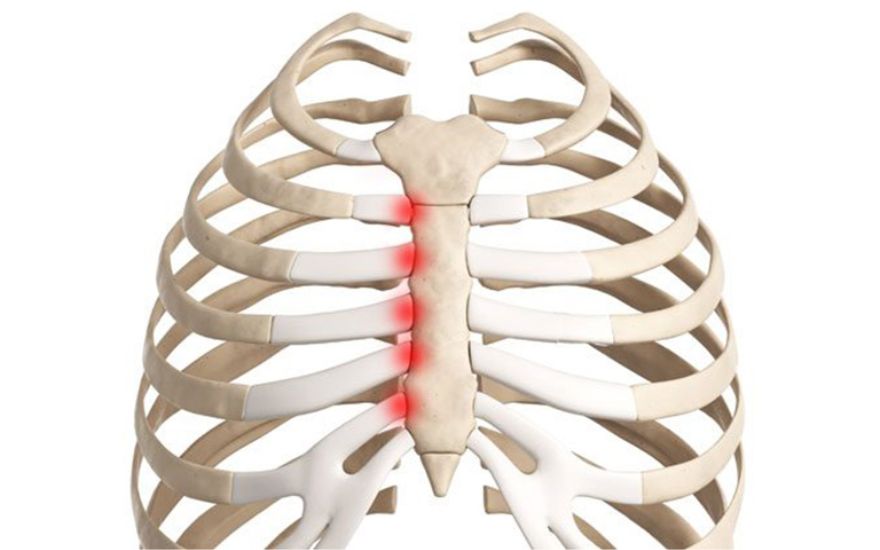
This condition is not life-threatening and is generally considered benign; however, the associated pain and swelling may cause significant anxiety and negatively affect daily activities and overall quality of life.
Notably, chest and back pain associated with Tietze syndrome can be easily mistaken for more serious conditions such as myocardial infarction or pleuritis. Such misinterpretation may lead to inappropriate treatment decisions or delays in receiving necessary and appropriate medical care.
Causes and risk factors of Tietze syndrome
The exact etiology of Tietze syndrome has not yet been clearly established. However, clinical observations and available studies suggest several factors that may contribute to the development of this condition, including:
- Chest trauma. Direct impact or minor injuries to the costochondral joints may trigger localized inflammation and pain.
- Forceful or prolonged coughing. Repetitive mechanical stress from persistent coughing, particularly in the context of pneumonia or bronchitis, can irritate the costochondral region.
- Excessive physical exertion. High-intensity activities or prolonged improper posture may result in strain and microtrauma to the costal cartilage.
- Inflammatory conditions. Certain systemic or localized inflammatory processes, especially those involving the thoracic region, may contribute to irritation and the development of Tietze syndrome.
Certain populations are considered to be at higher risk of developing Tietze syndrome, including:
- Young adults aged 20–40 years. This group is most commonly affected, as individuals are more likely to engage in vigorous physical activities or repetitive movements.
- Individuals performing heavy manual labor. People who frequently lift heavy objects, work under sustained physical strain, or adopt improper movement and posture are at increased risk of chest wall injury.
- Patients with a history of inflammatory joint disease. Chronic inflammatory conditions such as rheumatoid arthritis or other immune-mediated disorders may increase susceptibility to Tietze syndrome.
How to recognize Tietze syndrome
Tietze syndrome presents with characteristic clinical features that help differentiate it from other conditions with similar manifestations, including:
- Sudden-onset pain localized to the costal cartilage, most commonly at the junction between the ribs and the sternum, with increased intensity during coughing, sneezing, or physical exertion.
- Localized swelling over the affected costochondral area with tenderness on palpation, a hallmark feature that helps distinguish Tietze syndrome from other conditions. The pain may radiate to the shoulder, back, or arm, leading to potential confusion with cardiovascular disorders.
- Absence of dyspnea or impairment of respiratory function, which assists in excluding pulmonary or cardiac pathology.
- Marked exacerbation of pain upon direct pressure over the involved area, while surrounding regions remain unaffected.

Attention to the above signs can facilitate early recognition of Tietze syndrome and prompt timely medical evaluation at an appropriate healthcare facility.
Effective management and treatment approaches for Tietze syndrome
Pain control and anti-inflammatory therapy Nonsteroidal anti-inflammatory drugs (NSAIDs) such as ibuprofen or acetaminophen (paracetamol) are commonly used to alleviate pain and reduce inflammation at the affected costochondral region. In cases of severe pain, stronger analgesics may be prescribed at the physician’s discretion.
Cold and warm compresses Application of cold compresses during the first 48 hours after symptom onset may help reduce swelling and inflammation. Subsequently, warm compresses can be applied to promote muscle relaxation and relieve local tension.
Physical therapy Targeted physiotherapy exercises help improve muscular flexibility and reduce tension in the chest wall, thereby supporting the recovery process. Techniques such as gentle massage and stretching may provide effective pain relief.
Corticosteroid injections (when indicated) In patients with persistent or refractory pain, local corticosteroid injection into the inflamed area may be considered to achieve rapid symptom relief. This approach is reserved for cases unresponsive to conservative measures.
Surgical intervention (rarely required) Surgery is considered only in exceptional cases where all other treatment modalities fail and chronic pain significantly impairs quality of life.

The treatment approaches described above are provided for reference purposes only. Individuals with symptoms suggestive of Tietze syndrome are advised to promptly visit the Musculoskeletal and Rheumatology Department at Hong Ngoc General Hospital, where specialist physicians will conduct a thorough evaluation and develop an individualized treatment plan tailored to each patient’s condition, promoting rapid recovery and effective prevention of recurrence.
For consultation and management of musculoskeletal disorders, please contact the hotline 0889 621 046 for free professional advice.
Note: The information provided in this article by Hong Ngoc General Hospital is for reference purposes only and does not replace professional medical diagnosis or treatment. Patients should not self-prescribe or self-medicate. For an accurate assessment of the medical condition, individuals are advised to visit a hospital or reputable healthcare facility for direct examination, diagnosis, and consultation on an appropriate treatment plan.
Follow the official fanpage of Hong Ngoc General Hospital for more useful health information:https://www.facebook.com/BenhvienHongNgoc