


Among pediatric tumors, brain tumors are one of the leading causes of mortality. In children, brain tumors are typically primary, while secondary tumors are rare. Pediatric brain tumors represent the most common solid tumors and rank second only to hematologic malignancies, whereas primary brain tumors in adults rank eighth in frequency.
Clinical signs of pediatric brain tumors
Children with brain tumors may present with a wide range of symptoms associated with increased intracranial pressure, cerebellar syndrome or focal neurological deficits.
Distinct features compared to adults include macrocephaly, bulging or widened fontanelles and separation of cranial sutures, particularly in children under 2 years of age. Additionally, affected children often experience frequent vomiting or are easily provoked to vomit; in many cases, they may initially be misdiagnosed with gastrointestinal disorders and undergo prolonged treatment in gastroenterology units.

Clinical manifestations vary depending on the tumor’s location, size and stage of progression.
- Increased intracranial pressure syndrome: The most common manifestations include headache, nausea and vomiting (often in the morning), behavioral changes, irritability, lethargy or sluggishness, impaired cognition and reduced concentration in school. Some children experience frequent or easily triggered vomiting and may be misdiagnosed with gastrointestinal disorders, leading to prolonged treatment in gastroenterology units. In certain cases, cardiovascular (bradycardia) and respiratory disturbances may occur. In advanced stages, children may become drowsy, stuporous or comatose. In infants and young children, signs include macrocephaly, widened and tense fontanelles, and separation of cranial sutures. Severe cases may present with inability to hold the head upright and prominent scalp veins, resembling hydrocephalus.
- Compression of the cerebellum and brainstem: Tumors located in the posterior fossa (accounting for approximately 50–55% of pediatric brain tumors) often present with signs of increased intracranial pressure along with cerebellar or adjacent structure compression. Children may exhibit unsteady standing, inability to walk, ataxic gait and impaired coordination with dysmetria.
- Focal neurological deficits: Tumors located at the skull base, pituitary or pineal region may lead to endocrine disturbances such as diabetes insipidus, delayed puberty, growth hormone deficiency, feminization or abnormal development. Compression of the optic nerve (cranial nerve II) may cause blurred vision, hemianopia or even blindness. Pineal region tumors may present with Parinaud syndrome and sleep–wake disturbances. Compression of the vestibulocochlear nerve (cranial nerve VIII) may result in tinnitus, hearing impairment or deafness.
- Frontal lobe tumors may cause behavioral changes, while tumors in language areas may lead to dysarthria, speech delay or mutism. Children may also present with seizures, facial paralysis or dysphagia. Tumors affecting motor areas can result in limb weakness or hemiplegia. Tumors in the posterior fossa or upper spinal cord may cause neck pain, restricted neck movement, quadriplegia, sensory disturbances and sphincter dysfunction.
- Posterior fossa tumors are commonly associated with increased intracranial pressure, hydrocephalus, cerebellar syndrome, cranial nerve palsies or brainstem compression. Supratentorial tumors often present with increased intracranial pressure and seizures. Tumors in the pituitary, pineal region or ventricular system may exhibit distinct clinical features.
In summary, the clinical signs of pediatric brain tumors can be subtle and difficult to recognize. Children may present only with nonspecific symptoms such as vomiting or headache, which can lead to delayed diagnosis. In suspected cases, computed tomography or magnetic resonance imaging should be performed for accurate evaluation.
Diagnostic methods for pediatric brain tumors
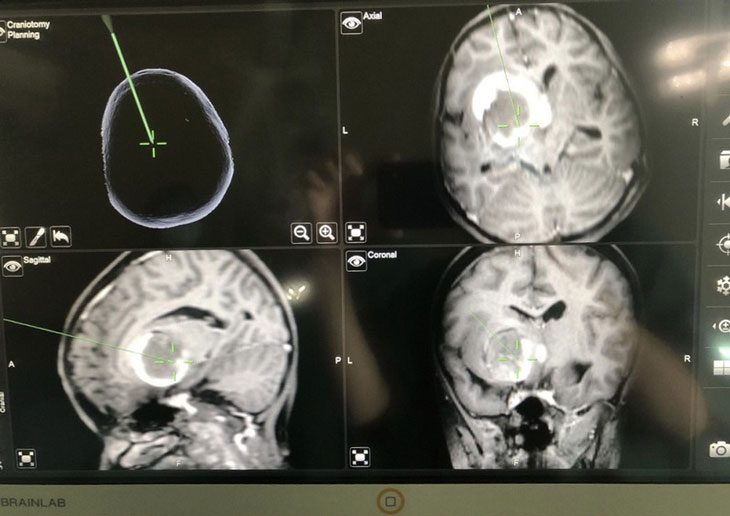
Currently, a variety of imaging modalities are available for the diagnosis of brain tumors. Among these, magnetic resonance imaging and computed tomography play a particularly critical role in the diagnosis of pediatric brain tumors. Other imaging techniques may provide supportive or complementary information in the diagnostic and therapeutic process.
Treatment of pediatric brain tumors
- Surgical management: Surgery remains the primary treatment modality for pediatric brain tumors. Complete tumor resection offers the best therapeutic outcome; however, this depends on multiple factors including tumor location, size, extent of invasion, surgical expertise, anesthetic management and the risk of postoperative neurological sequelae. Pediatric brain tumor surgery is technically challenging due to difficulties in patient positioning, head stabilization, risk of air embolism (particularly in the sitting position) and intraoperative blood loss.
- Management of hydrocephalus: More than 30% of posterior fossa tumors are associated with hydrocephalus before and after treatment. Endoscopic third ventriculostomy has largely replaced traditional ventriculoperitoneal shunting. This minimally invasive approach is cost effective, associated with fewer complications, allows faster recovery and restores cerebrospinal fluid circulation more physiologically. It also reduces the risk of tumor dissemination to the peritoneal cavity.
- Radiotherapy: Radiotherapy is effective in certain pediatric brain tumors, particularly medulloblastoma and germinoma. It is indicated in cases of residual tumor following surgery. However, due to potential long term effects on growth and neurodevelopment, careful consideration is required before initiation. In selected cases, delaying radiotherapy until the child is older may help minimize adverse effects.
- Chemotherapy: Chemotherapy is indicated for high grade malignant brain tumors in children. However, it is associated with significant adverse effects, sometimes more severe than the disease itself. Therefore, its use should be carefully evaluated and individualized.
Note: The information provided in this article by Hong Ngoc General Hospital is for reference purposes only and does not replace professional medical diagnosis or treatment.
For more health related updates, please follow Hong Ngoc General Hospital’s official fanpage: https://www.facebook.com/BenhvienHongNgoc/