


Prolonged hot weather can leave many people feeling severely fatigued, with headaches and dizziness after being outdoors. These symptoms are often overlooked because they are assumed to be caused only by dehydration. However, doctors warn that they may also be early signs of heat-related illness, heatstroke, or even stroke.
Extreme heat leaves many people exhausted
After working outdoors under intense heat for several hours, a 56-year-old man developed a severe headache, dizziness, and confusion, while his blood pressure was found to be elevated. At first, his family assumed that he was simply fatigued because of the weather and let him rest at home. However, when he began to develop difficulty speaking and weakness in his arms and legs, his family quickly brought him to the emergency department of Hong Ngoc General Hospital.
According to Vu Thi Thu Hien, MD, MSc, Resident Doctor, General Internal Medicine Department, Hong Ngoc - Phuc Truong Minh General Hospital: “This was no longer a typical mild case of heat-related illness, but a dangerous circulatory and neurological disturbance triggered by extreme heat.”
Dr. Hien also noted that prolonged hot weather can cause many people to experience headaches, dizziness, and severe fatigue after being outdoors or working in the sun for long periods. However, these symptoms are often underestimated because they are thought to be caused only by dehydration. In fact, in some cases, they may be warning signs of severe heat-related illness, heatstroke, or even stroke, requiring prompt transfer to a medical facility.
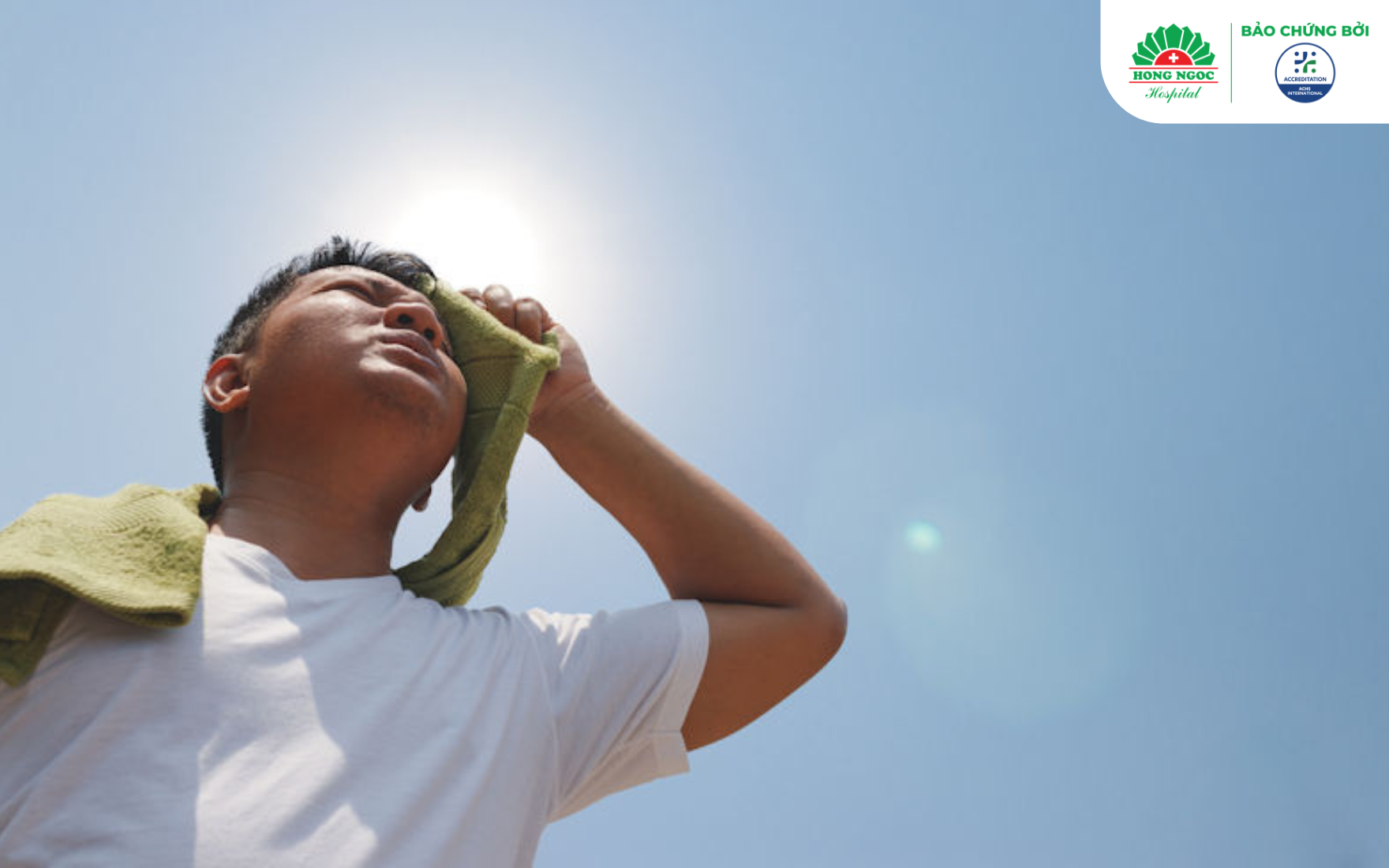
“When ambient temperatures rise, the body has to continuously adjust to cool itself down through mechanisms such as vasodilation, increased sweating, and increased circulation. This process causes the body to lose a significant amount of fluid and electrolytes. If these are not replaced promptly, the patient can rapidly develop heat exhaustion, heatstroke, or even serious complications such as cardiovascular disturbances, stroke, or multiple organ failure” Dr. Hien said.
Because the body has to constantly adapt to high temperatures, it can easily become overwhelmed, especially in people with poor resistance or underlying medical conditions.
A typical example was the case of Mr. P.V.M., 46, who had chronic kidney disease and was admitted late because he underestimated his symptoms after working continuously for many hours at a construction site in extreme heat. He had previously experienced headache, excessive thirst, severe fatigue, and reduced urination, but thought these were only signs of common heat-related illness. Upon admission, he was diagnosed with heatstroke complicated by acute kidney injury due to severe dehydration and electrolyte imbalance.
How are heat-related illness, heat exhaustion, and heatstroke different?
According to doctors, headache, dizziness, or severe fatigue after being outdoors in the sun is not always dangerous. However, depending on the degree of dehydration and the body’s ability to regulate temperature, these symptoms can progress rapidly from mild to severe.
In mild cases, patients usually experience only fatigue, thirst, mild headache, sweating, or transient dizziness. Most of these cases improve after resting in a cool place and adequately replacing fluids and electrolytes.
However, when the body loses more fluid, begins to lose its ability to regulate temperature, and develops more severe electrolyte imbalance, patients may experience a severe headache, nausea, a rapid heartbeat, low blood pressure, muscle cramps, and profound exhaustion. This is the stage of heat exhaustion, which requires close monitoring because it can worsen within a short period of time.
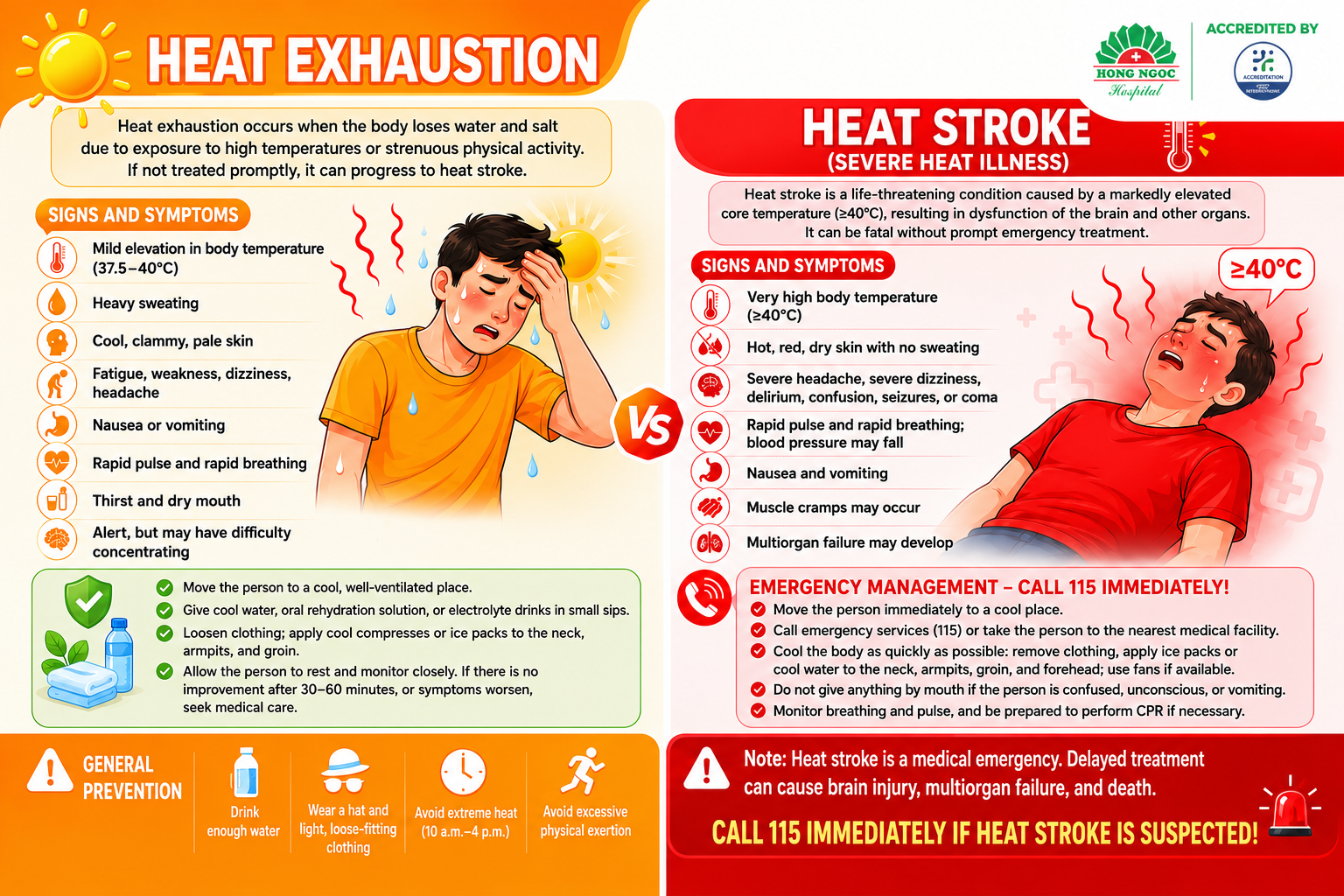
The most dangerous condition is heatstroke, a medical emergency that can be life-threatening if not treated promptly. Patients may develop a high fever above 39-40°C, severe headache, confusion, delirium, seizures, fainting, shortness of breath, chest pain, an abnormally rapid heartbeat, or loss of consciousness.
The “golden window” for emergency care in heatstroke and stroke
According to Vu Thi Thu Hien, MD, MSc, resident physician, the “golden window” for emergency care plays a decisive role in the patient’s chances of recovery in cases of heatstroke and stroke.
Timely cooling in patients with heatstroke can help reduce the risk of damage to the brain, heart, kidneys, and other vital organs. Meanwhile, in patients with stroke, bringing the patient to the hospital within the first few hours increases the likelihood of effective intervention and helps reduce the risk of severe long-term complications.
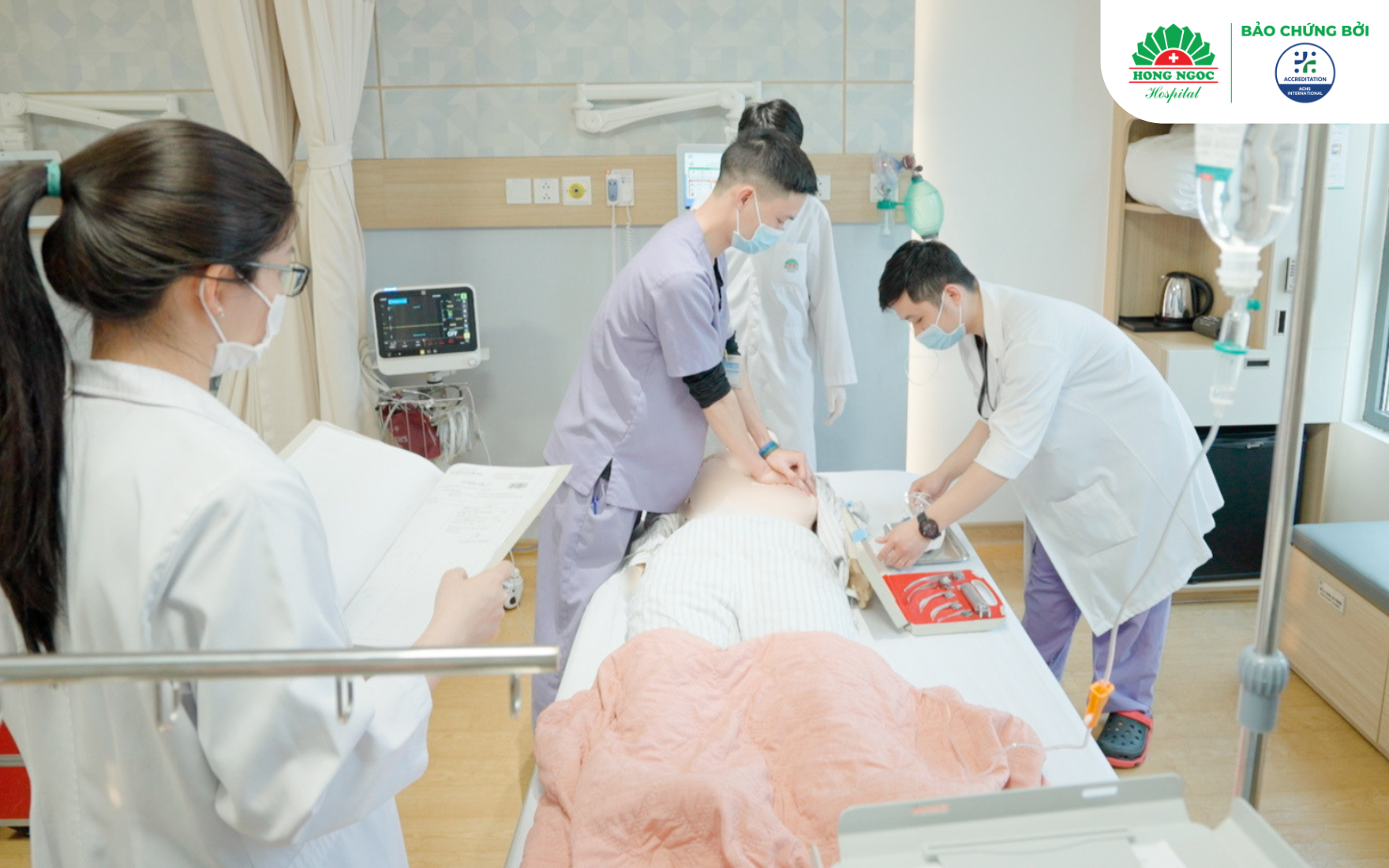
“Many patients are admitted late because they assume it is only a common headache caused by hot weather. This is a very dangerous mistake, as a delay of just a few hours can increase the risk of serious complications or even become life-threatening,” Dr. Hien emphasized.
To reduce the risk of heat-related illness, heat exhaustion, and heatstroke, doctors recommend maintaining adequate hydration, replacing electrolytes appropriately, limiting outdoor activities during peak heat hours, getting sufficient rest, and proactively monitoring health during summer.
Hong Ngoc General Hospital has received ACHS International quality accreditation for healthcare standards, demonstrating its comprehensive treatment capacity and safe care processes that provide patients with greater confidence and peace of mind.
No. 55 Yen Ninh Street, Ba Dinh, Hanoi No. 8 Chau Van Liem Street, Tu Liem, Hanoi
|