



Prostatitis is an inflammatory condition of the prostate gland, a male-specific organ. If not treated promptly, prostatitis can lead to serious complications, including infertility.
What is prostatitis?
The prostate gland is a male-specific organ located just below the bladder and surrounding the upper part of the urethra. It plays an important role in urinary control and ejaculation, helping regulate urine flow and preventing semen from flowing backward into the bladder during ejaculation.
Prostatitis is an inflammatory condition of the prostate gland, which may present in acute or chronic forms. Common symptoms include difficulty urinating, frequent or urgent urination, painful urination, accompanied by discomfort in the lower abdomen, lower back pain, or pain in the testicles.
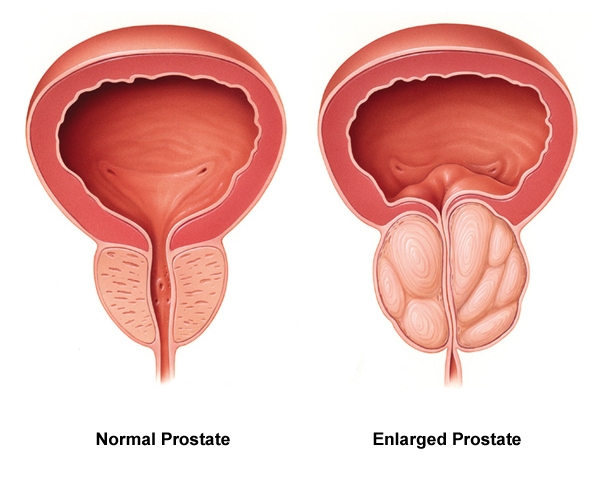
Under normal conditions, the prostate is about the size of a walnut. However, when inflamed, it becomes swollen and enlarged, significantly affecting overall health, daily activities, and particularly sexual function.
Causes of prostatitis in men
There are two main causes of prostatitis: bacterial prostatitis and non-bacterial prostatitis.
Bacterial prostatitis
The primary cause of bacterial prostatitis is urinary tract infection or sexually transmitted infection (STI). When the bladder becomes infected or inflamed by bacteria, urine retention may occur. The stagnant urine allows bacteria to multiply and spread to the prostate, leading to inflammation. This condition is commonly seen in men with a history of neurogenic bladder, urethritis, or benign prostatic hyperplasia (BPH).
In addition, sexually transmitted diseases are also a frequent cause of bacterial prostatitis. Many men engage in unprotected intercourse with multiple partners, which increases the risk of infection and subsequent prostate inflammation.
Non-bacterial prostatitis
Non-bacterial prostatitis is often associated with chronic pelvic pain syndrome, where recurrent pelvic pain leads to inflammation and nerve irritation in the pelvic region. This results in persistent pain in the lower abdomen, pelvic area, or perineum, even without bacterial infection.
Symptoms of prostatitis in men
Prostatitis presents with different symptoms depending on its type and stage, generally classified into acute bacterial prostatitis, chronic bacterial prostatitis, and non-bacterial prostatitis.
Symptoms of acute bacterial prostatitis
- Fatigue, fever, chills, and severe pain in the groin and lower back, especially in the area between the scrotum and the pubic bone
- Frequent urination, difficulty urinating, interrupted urine flow, with the need to strain during urination
- Burning sensation when urinating, frequent urination more than 10 times during the day, and nighttime urination 2–4 times per night
- Sexual dysfunction during intercourse, such as painful ejaculation and penile stiffness or spasm
Symptoms of chronic bacterial prostatitis
The symptoms are similar to those of acute prostatitis but persist for a longer period and tend to be more severe, sometimes accompanied by signs of complications such as:
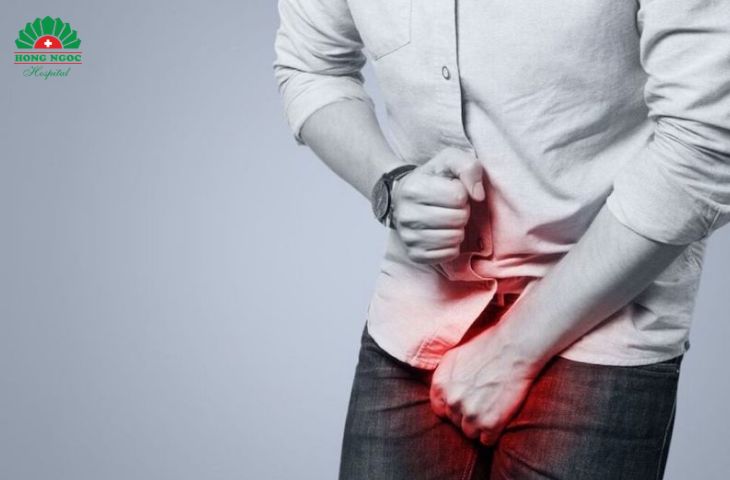
- Pain and discomfort in the lower abdomen radiating to the lower back, groin, or testicles, along with frequent urination.
- Cloudy urine, sometimes mixed with blood.
- Decreased libido, erectile dysfunction, and ejaculatory disorders.
Symptoms of non-bacterial prostatitis
The symptoms are similar to those of chronic prostatitis; however, urine and semen tests show no bacteria, only the presence of pus cells. In this form, patients usually experience less frequent urination and reduced burning sensation when urinating.
Regardless of the cause, prostatitis significantly affects men’s overall health and sexual function. Because the affected area is highly sensitive, many patients tend to delay medical examination until the condition becomes severe and complications appear, making treatment more difficult.
If you suspect prostatitis, please schedule an appointment with our specialists by calling Hotline: 0912.002.131 or filling out the form below for early examination and proper treatment.
Reader may also be interested in:
Severity of prostatitis
If not detected early and treated promptly, prostatitis can lead to serious complications. Inflammation of the prostate may compress the bladder, causing urine retention, which over time can impair kidney function.
Since the prostate is responsible for producing seminal fluid, inflammation can also reduce sperm quality, increasing the risk of infertility or subfertility.
Other possible complications include:
- Sepsis (blood infection)
- Epididymitis (inflammation of the epididymis)
- Erectile dysfunction
- Prostatic abscess
Diagnostic methods for prostatitis
Doctors diagnose prostatitis based on the patient’s medical history, overall health condition, digital rectal examination, and various laboratory and imaging tests to evaluate the prostate and detect potential malignant lesions.
Digital rectal examination (DRE): In this procedure, the doctor inserts a gloved, lubricated finger into the rectum to assess the size, consistency, and elasticity of the prostate. If bacterial inflammation is present, the gland may feel swollen, soft, and tender. During the examination, the doctor may also gently massage the prostate to collect a small sample of prostatic fluid through the urethra for infection testing.
Urinalysis: Used to detect bacteria and other abnormalities that may indicate inflammation of the prostate.
Urine culture: Helps identify the specific bacteria causing the infection and determine the most effective antibiotic treatment.
Urethral secretion culture: Similar to urine culture, this test helps identify pathogens responsible for prostate infection to guide appropriate treatment.
Cystoscopy: A thin, flexible cystoscope is inserted through the urethra, allowing direct visualization of the bladder and urethra to evaluate inflammation and monitor treatment progress.
Transrectal ultrasound (TRUS): Assesses the size, structure, and lesions of the prostate, such as inflammation, nodules, or tumors, and can also detect early signs of prostate cancer.
Prostate Doppler ultrasound: Evaluates tissue density, calcification, cysts, or suspicious lesions, as well as the condition of the seminal vesicles on both sides.
Magnetic resonance imaging (MRI): Provides detailed images to identify inflamed regions within the prostate and helps exclude the possibility of prostate cancer.
How is prostatitis treated?
After clinical and laboratory diagnosis, doctors will determine the most appropriate treatment plan based on the cause, condition, and severity of the inflammation.
For acute bacterial prostatitis, the standard treatment involves antibiotic therapy combined with rest. In cases of severe infection, the patient may need to be hospitalized for close monitoring and intravenous antibiotics. The typical treatment duration ranges from 4 to 6 weeks.

For chronic bacterial prostatitis, treatment is usually based on oral antibiotic therapy. The typical duration is about six weeks, provided the patient shows good clinical response. Depending on the patient’s overall health, doctors may also prescribe anti-inflammatory drugs, alpha-blockers, or muscle relaxants to relieve symptoms and improve urination.
Additionally, physical therapy may be combined with medication. Specific exercises and relaxation techniques such as groin massage, pelvic floor relaxation, and light physical activity can help improve circulation and reduce discomfort. Doctors strongly advise that men with prostatitis should not self-medicate. Instead, they should seek prompt medical care at a specialized healthcare facility to ensure proper diagnosis and treatment, avoiding antibiotic overuse that may lead to drug resistance.
Prevention of prostatitis
Here are some important recommendations to help men reduce the risk of prostatitis:
- Maintain a healthy lifestyle with a balanced diet and regular exercise.
- Drink plenty of water and consume foods rich in fiber and green vegetables to promote healthy urination and bowel movements.
- Practice good genital hygiene daily and after sexual activity to prevent bacterial, viral, or fungal infections.
- Adopt healthy habits — avoid smoking, limit alcohol consumption, and manage stress effectively.
- Engage in safe and moderate sexual activity, avoiding unprotected intercourse or multiple sexual partners.
Prostatitis is a common male urological condition that causes significant discomfort and affects quality of life. Understanding its causes, symptoms, and treatment options is the best way to protect men’s health.
The Department of Andrology and Urologic Surgery at Hong Ngoc General Hospital is one of the most reputable centers for men’s health, particularly in diagnosing and treating prostate diseases. Patients are examined and treated by leading experts in andrology and urology, with over 30 years of experience working at top national hospitals such as Bach Mai and Viet Duc, and holding urologic surgery certifications from the United States and Japan, successfully treating thousands of complex cases.
Book an appointment with our specialists by calling Hotline: 0912.002.131 or filling out the form below.
Note: The information provided in this article by Hong Ngoc General Hospital is for reference only and should not replace professional medical diagnosis or treatment.