


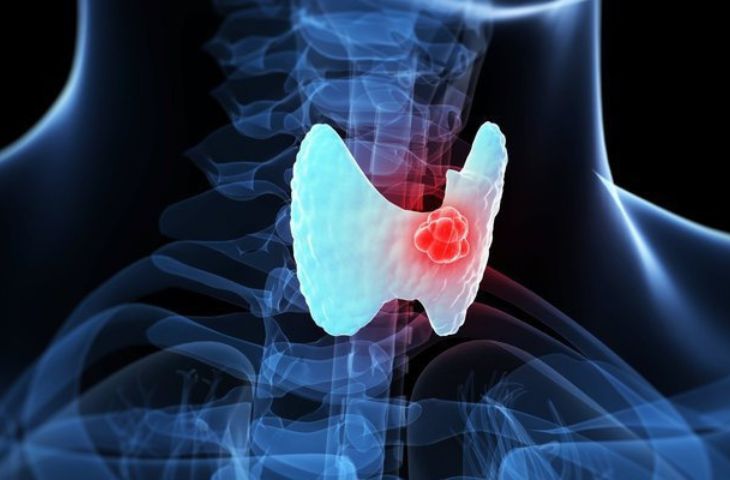
Thyroid cancer is a disease whose incidence has increased rapidly in recent years. Depending on the stage of thyroid cancer, each patient may have a different prognosis and receive different treatment indications.
Thyroid cancer - the most common endocrine malignancy
Thyroid cancer, also known as thyroid carcinoma, occurs when malignant cells develop and form cancerous tumors within the thyroid tissue. According to estimates from medical sources, thyroid cancer accounts for more than 90% of all endocrine malignancies.
Statistics from GLOBOCAN, a global cancer database developed by the International Agency for Research on Cancer under the World Health Organization, show that each year, more than 160,000 new cases of thyroid cancer are recorded among women and 50,000 new cases among men worldwide. In Vietnam, thyroid cancer ranks as the sixth most common cancer among women.
Notably, women of reproductive age and older adults are among the groups most commonly affected by thyroid cancer.

Thyroid cancer is considered a highly treatable disease. However, its danger lies in the fact that malignant cells can invade and progress silently within the body.
In the early stages, signs of thyroid cancer are often vague and nonspecific, making the disease difficult to detect. Many patients only seek medical attention when they notice abnormal changes in their body, at which point the cancer may have already metastasized to other organs, significantly reducing the chances of successful treatment.
Therefore, medical experts recommend that people undergo regular thyroid check-ups and appropriate thyroid cancer screening tests to enable early detection. Early diagnosis provides an important foundation for effective treatment, better disease control, and long-term health stability for patients.
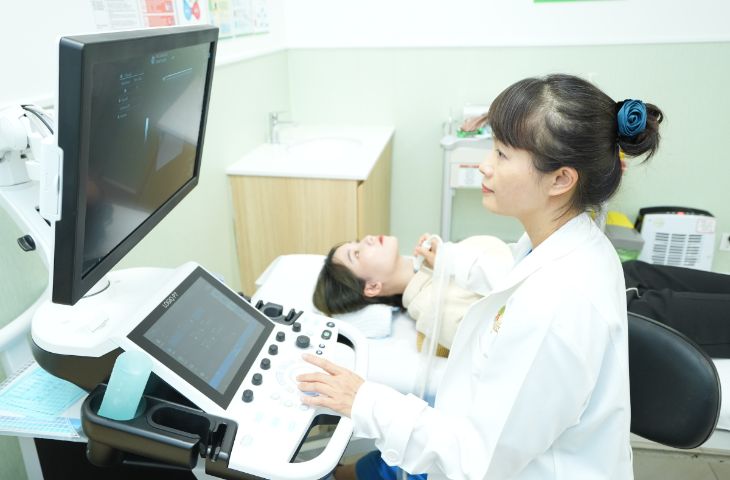
Thyroid cancer is classified into four main types: papillary thyroid carcinoma, follicular thyroid carcinoma, medullary thyroid carcinoma, and anaplastic thyroid carcinoma. In each type, malignant cells may progress through different stages of thyroid cancer.
To better understand their health status, patients should visit a reputable medical facility for examination and seek specialist consultation from endocrinologists. To schedule an appointment with an endocrinology and thyroid specialist, please contact the hotline at 0911 858 626 or register via the FORM.
Stages of thyroid cancer
Understanding the stages of thyroid cancer means assessing the extent of disease progression and the degree to which cancer cells have spread. This is an important basis for physicians to determine an individualized cancer treatment plan for each patient.
To determine the stage of thyroid cancer, physicians may perform several diagnostic tests, such as ultrasound, computed tomography (CT), magnetic resonance imaging (MRI), and other appropriate investigations.
Stages of follicular and papillary thyroid cancer
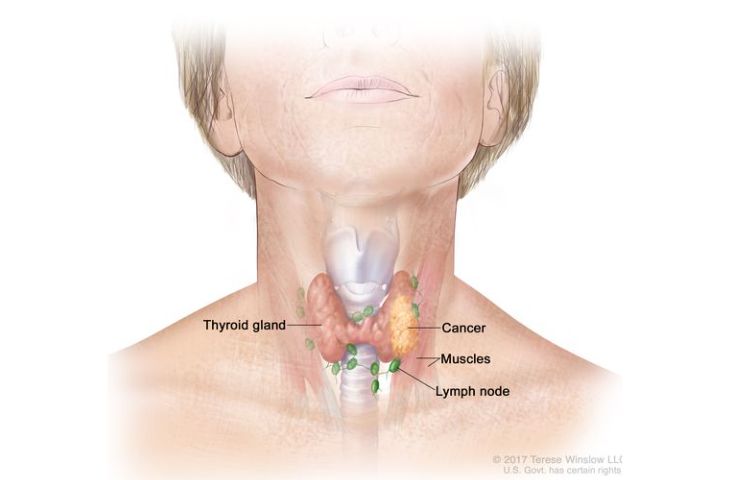
The stages of papillary thyroid carcinoma and follicular thyroid carcinoma are classified based on tumor size, the extent of invasion into surrounding structures, and the spread of cancer cells to other parts of the body. However, due to the specific characteristics of papillary and follicular thyroid cancers, the patient’s age is also taken into consideration during disease staging.
Typically, papillary thyroid carcinoma and follicular thyroid carcinoma are classified into four stages as follows:
Stage I: The tumor is 2 cm or smaller and remains confined to the thyroid gland. Patients are often younger and may have a history of thyroid disease.
Stage II: The tumor is larger than 2 cm and may have spread to nearby blood vessels and nerves, or extended to adjacent structures such as the throat or esophagus. Patients are often middle-aged.
Stage III: The tumor is larger than 4 cm and has spread to nearby organs or other anatomical structures. This stage is more commonly seen in older patients.
When papillary thyroid carcinoma and follicular thyroid carcinoma are detected early and treated promptly, patients have a very high survival rate. Therefore, early detection and diagnosis of papillary and follicular thyroid cancers are essential to ensure timely and appropriate treatment, thereby improving patients’ chances of survival.
Stages of medullary thyroid carcinoma
Medullary thyroid carcinoma, which originates from parafollicular C cells, is generally classified into four main stages:
Stage I medullary thyroid carcinoma usually involves only the thyroid gland and may be detected early through imaging methods such as ultrasound, CT scans, or MRI. At this stage, the cancer has not spread to other organs in the body.
Stage II medullary thyroid carcinoma: Cancer cells continue to grow, causing the tumor to reach 2–4 cm in size. At this stage, symptoms such as swelling, pain, and discomfort in the neck area and around the ears may be observed.
Stage III medullary thyroid carcinoma typically indicates that the disease has spread to the lymph nodes. Symptoms may become more severe at this stage, including shortness of breath, bone pain, and fatigue. The tumor size may be difficult to determine.
Stage IV medullary thyroid carcinoma is the most advanced stage, in which the disease has spread to tissues near the spine and to other vital organs, including the liver, brain, and heart. At this stage, symptoms are often severe and may be life-threatening.
Stages of anaplastic thyroid carcinoma
Anaplastic thyroid carcinoma is not associated with the patient’s age. Patients diagnosed with this form of thyroid cancer are automatically classified as having stage IV disease, which is further divided into three substages:
Stage IVA: The tumor remains confined to the thyroid gland and has not spread to the lymph nodes or other organs. The tumor size is not specified.
Stage IVB: The tumor size cannot be determined, and cancer cells may have spread to the lymph nodes or nearby structures, such as the trachea, esophagus, nerves, or major blood vessels. However, the cancer has not yet metastasized to distant organs.
Stage IVC: Cancer cells have metastasized to organs located far from the thyroid gland. Similar to advanced medullary thyroid carcinoma, most patients at this stage are unlikely to achieve a complete cure.
Note: The information provided in this article by Hong Ngoc General Hospital is for reference purposes only and is not intended to replace professional medical diagnosis or treatment. To accurately assess their medical condition, patients should visit a reputable healthcare facility for a direct examination by a physician and consultation on an appropriate and effective treatment plan.
Follow the official fanpage of Hong Ngoc General Hospital for more useful health information.